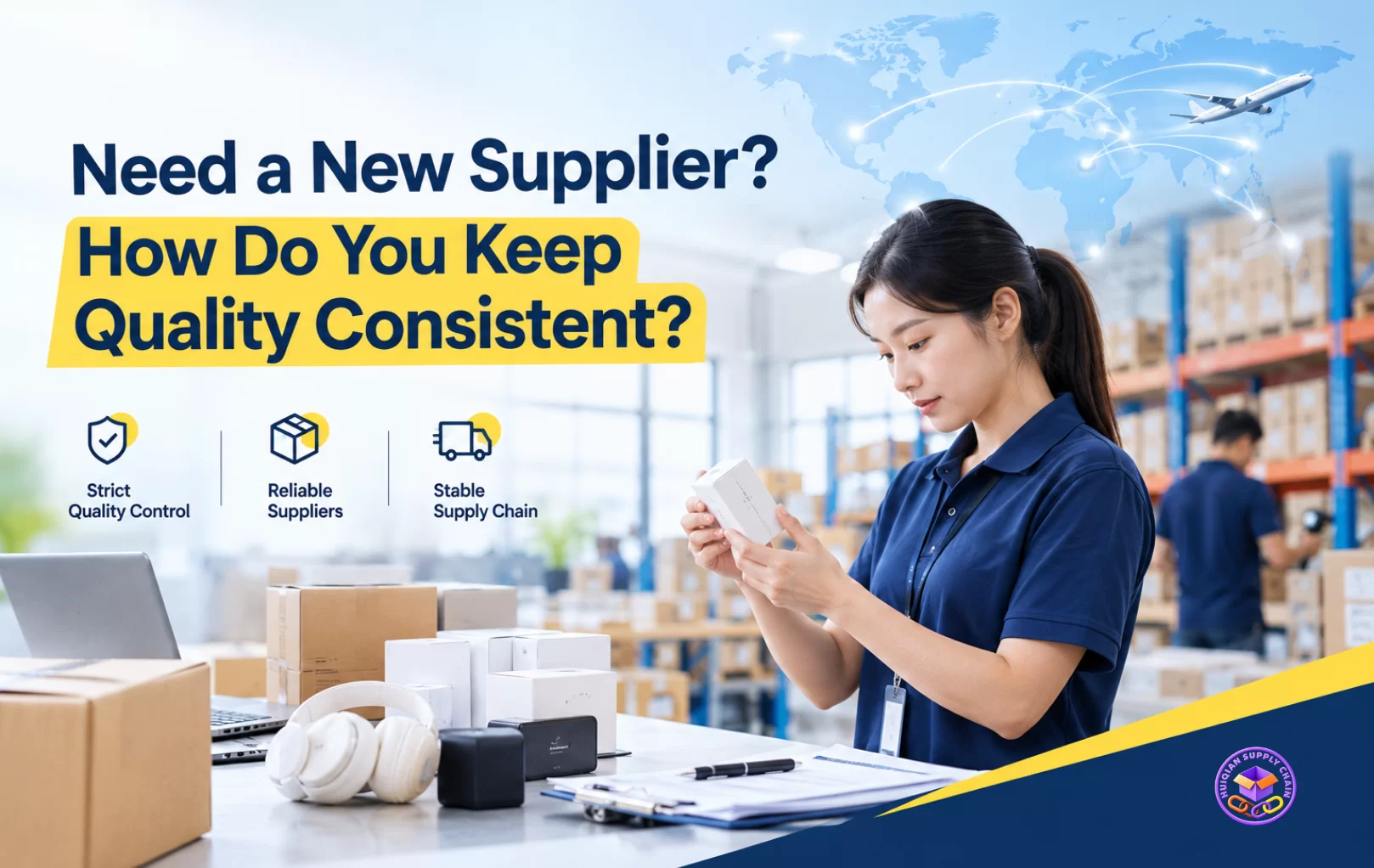
Need a New Supplier? How Do You Keep Quality Consistent?

Finding a new supplier can help your ecommerce business reduce costs, improve product quality, or prepare for higher order volumes. However, switching suppliers also comes with risks. Differences in materials, production processes, and quality standards can affect the customer experience.So, how can you work with a new supplier without compromising product quality?


1. Set Clear Quality Standards

Before placing your first bulk order, define your product requirements clearly. Share detailed specifications, including dimensions, materials, colors, packaging, and acceptable defect rates.Never assume that a new supplier will follow the same standards as your previous one. Clear expectations help reduce misunderstandings and prevent inconsistent products from reaching your customers.

2. Request Samples Before Bulk Production

Always test product samples before committing to a large order. Compare them with your existing products to identify differences in appearance, functionality, durability, and packaging.If adjustments are needed, communicate them before production begins. Approving a final sample gives both parties a clear reference for future orders.

3. Establish a Consistent Quality Control Process

Quality control should not depend entirely on the supplier's promises. Create a repeatable inspection process that covers raw materials, production, finished products, and packaging.For ecommerce businesses, pre-shipment inspections are especially important because they help identify defects before products enter the fulfillment process. For products with higher quality risks, consider additional inspections during production.

4. Start Small and Monitor Performance

Avoid transferring all your orders to a new supplier immediately. Begin with a small trial order and evaluate product consistency, production lead times, communication, and defect rates.Track these results over several orders to determine whether the supplier can maintain your standards as demand grows.

5. Work With a Reliable Supply Chain Partner

Managing a new supplier requires more than comparing prices. You also need visibility into production, inventory, quality inspections, and shipping.A reliable supply chain partner can help coordinate suppliers, inspect products, and manage fulfillment, reducing the risk of quality issues as your business scales.

Final Thoughts

Switching suppliers doesn't have to mean sacrificing product quality. By setting clear standards, testing samples, implementing quality checks, and monitoring performance, you can build a reliable supply chain with confidence.The goal isn't simply to find a cheaper supplier. It's to find a partner who can deliver consistent quality as your business grows.