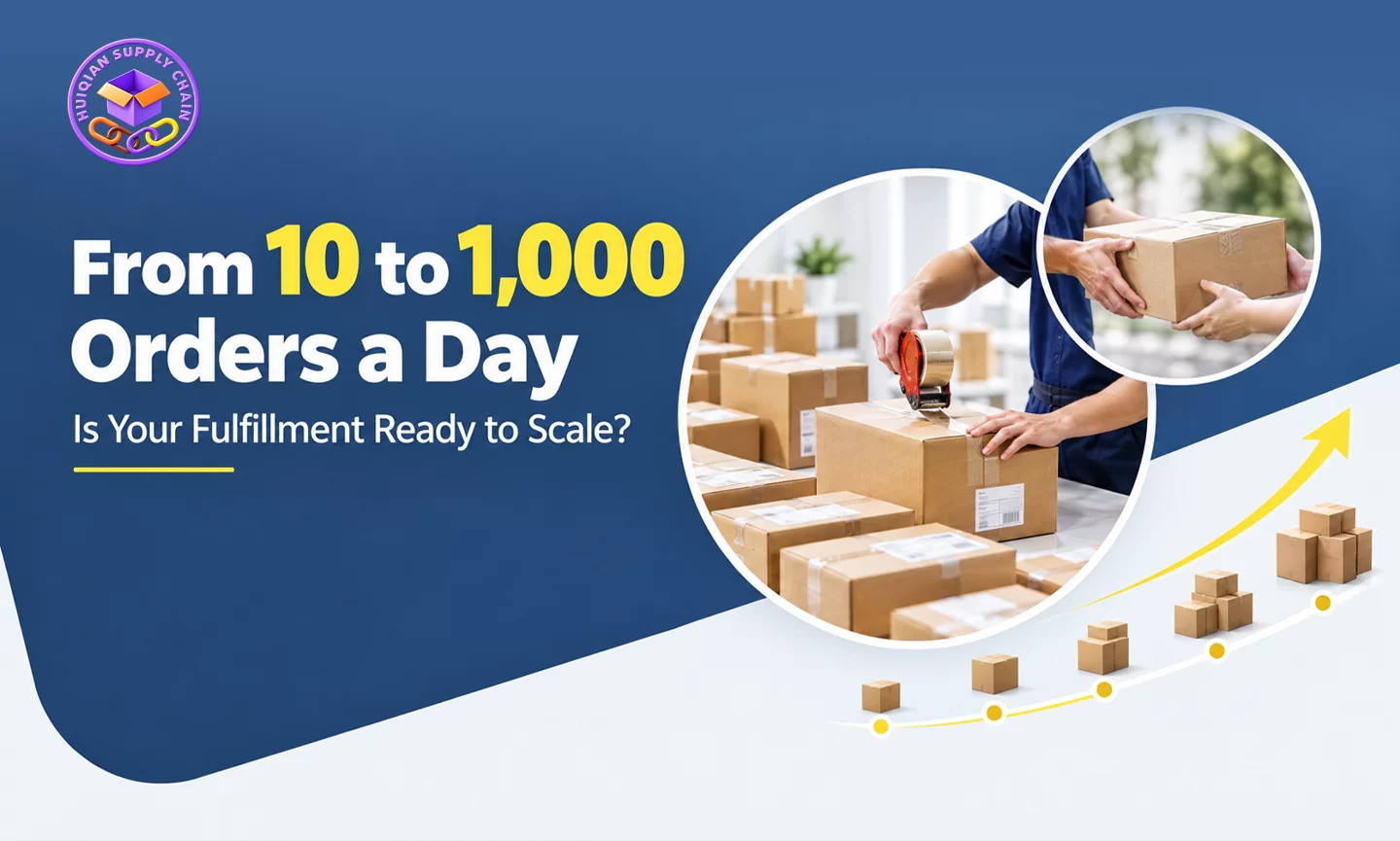
From 10 to 1,000 Orders a Day: Is Your Fulfillment Ready to Scale?
Growing an ecommerce business is exciting. More orders mean more customers, stronger sales, and new opportunities to build your brand.
But growth also brings new challenges. Managing inventory, coordinating suppliers, packing orders, and keeping deliveries on schedule can become increasingly difficult as your store expands.
What works when you ship 10 orders a day may not work when you reach 100 or 1,000.
That is why fulfillment should be more than a way to ship products. It should be a system that supports your business as it grows.
1. What Is Ecommerce Fulfillment?
Ecommerce fulfillment covers the process of getting products from suppliers to customers. It typically includes product sourcing, inventory management, warehousing, order processing, packaging, shipping, and sometimes returns handling.
For dropshipping and online store owners, these tasks can quickly become complicated when managed across multiple suppliers and service providers.
A reliable fulfillment setup brings these operations together, helping sellers reduce manual work, maintain better inventory visibility, and provide a more consistent customer experience.
Instead of spending all your time solving operational problems, you can focus on marketing, product development, and growing your business.
2. Why Growing Stores Need a Better Fulfillment Strategy
At the beginning, handling orders manually may seem manageable. As sales increase, however, small operational problems can quickly become bigger ones.
Inventory problems: Inaccurate stock information can lead to overselling, canceled orders, and disappointed customers.
Slow order processing: Manual workflows become harder to maintain when order volumes increase.
Inconsistent packaging: Standard packaging may not reflect the quality or identity of your brand.
Rising shipping costs: Without comparing suitable shipping options, logistics expenses can reduce your profit margins.
Limited visibility: Managing multiple suppliers, SKUs, and destinations makes it harder to track orders and inventory efficiently.
The solution is not simply to work faster. It is to build a fulfillment process that can handle more orders without creating unnecessary complexity.
3. What Should You Look for in a Fulfillment Partner?
Choosing the right fulfillment partner can make a significant difference to your operations. Rather than comparing providers on price alone, consider the capabilities your business needs now and in the future.
Product Sourcing and Quality Control
Reliable fulfillment starts before an order is shipped. Product sourcing support helps you find suitable suppliers, while quality checks can identify issues before products reach customers.
Warehousing and Inventory Management
A suitable warehouse setup helps you organize SKUs, monitor stock levels, and prepare products for fulfillment. Better inventory visibility also makes it easier to plan replenishment and respond to changing demand.
Order Processing and System Integration
Integration with ecommerce platforms can reduce manual order entry and improve workflow efficiency. For stores managing multiple sales channels, automated order synchronization and inventory updates can help simplify daily operations.
Custom Packaging and Branding
Packaging is part of the customer experience. Branded boxes, thank-you cards, and other customized packaging options can help create a more recognizable brand and make deliveries feel more personal.
Reliable Global Shipping
Your fulfillment strategy should match the markets you serve. Compare delivery estimates, shipping costs, tracking availability, and destination coverage before choosing shipping channels.
A good fulfillment partner should help coordinate these elements rather than treating every step as a separate problem.
4. Build a Fulfillment System That Grows With Your Store
A scalable fulfillment strategy should support your current order volume while leaving room for future growth.
For a small store, this may mean simplifying sourcing and order processing. For a growing brand, it may involve better inventory controls, system integrations, customized packaging, and more structured shipping management.
HQ Dropshipping provides an all-in-one fulfillment solution covering product sourcing, warehousing, order fulfillment, custom packaging, and global shipping.
With fulfillment capacity of up to 20,000 orders per day, HQ supports ecommerce sellers handling growing order volumes. Available shipping services include routes to the US, Europe, the UK, and Australia, with delivery options advertised at 3–8 days depending on the route and service.
For eligible businesses shipping 50 or more orders per day, free custom packaging is also available, subject to service terms.
Whether you operate a Shopify, Wix, WooCommerce, or Etsy store, the goal is to build a more coordinated supply chain that supports your business beyond its first stage of growth.
5. When Is It Time to Upgrade Your Fulfillment?
You do not need to wait until your operations become overwhelmed before reviewing your fulfillment setup.
Consider making a change if you frequently encounter stock discrepancies, spend too much time processing orders manually, struggle to maintain delivery expectations, or find it difficult to manage multiple suppliers.
It is also worth reviewing your setup before major promotional campaigns and seasonal sales periods.
Compare your current processing times, shipping costs, inventory accuracy, and customer feedback. These indicators can help you identify where your operations need improvement.
The right time to upgrade is when your current process starts limiting your ability to grow efficiently.
Final Thoughts
Growing an ecommerce business takes more than increasing sales. Your fulfillment operations must grow alongside your customer base.
From sourcing and inventory management to packaging and international shipping, every step contributes to the experience your customers receive.
A well-organized fulfillment system helps you manage higher order volumes, improve operational efficiency, and build a stronger foundation for long-term growth.
Your next growth milestone should not mean more operational headaches. Build a fulfillment system that is ready for what comes next.
Frequently Asked Questions
1. What is the difference between dropshipping and fulfillment?
Dropshipping is a business model in which sellers generally do not hold inventory themselves. Fulfillment refers to the operational process of storing, processing, packing, and shipping orders. A fulfillment partner can support dropshipping businesses as well as established ecommerce brands.
2. When should an ecommerce store use a fulfillment partner?
A fulfillment partner may be useful when order processing becomes time-consuming, inventory management grows more complicated, or a business needs more reliable shipping and packaging options.
3. Can a fulfillment partner support custom packaging?
Yes. Depending on the provider and service terms, options may include branded packaging, custom inserts, thank-you cards, and other packaging elements that reinforce brand identity.
4. What should I compare when choosing a fulfillment provider?
Consider total fulfillment costs, inventory management, order processing capabilities, quality control, shipping options, system integration, and the provider's ability to support your expected growth.