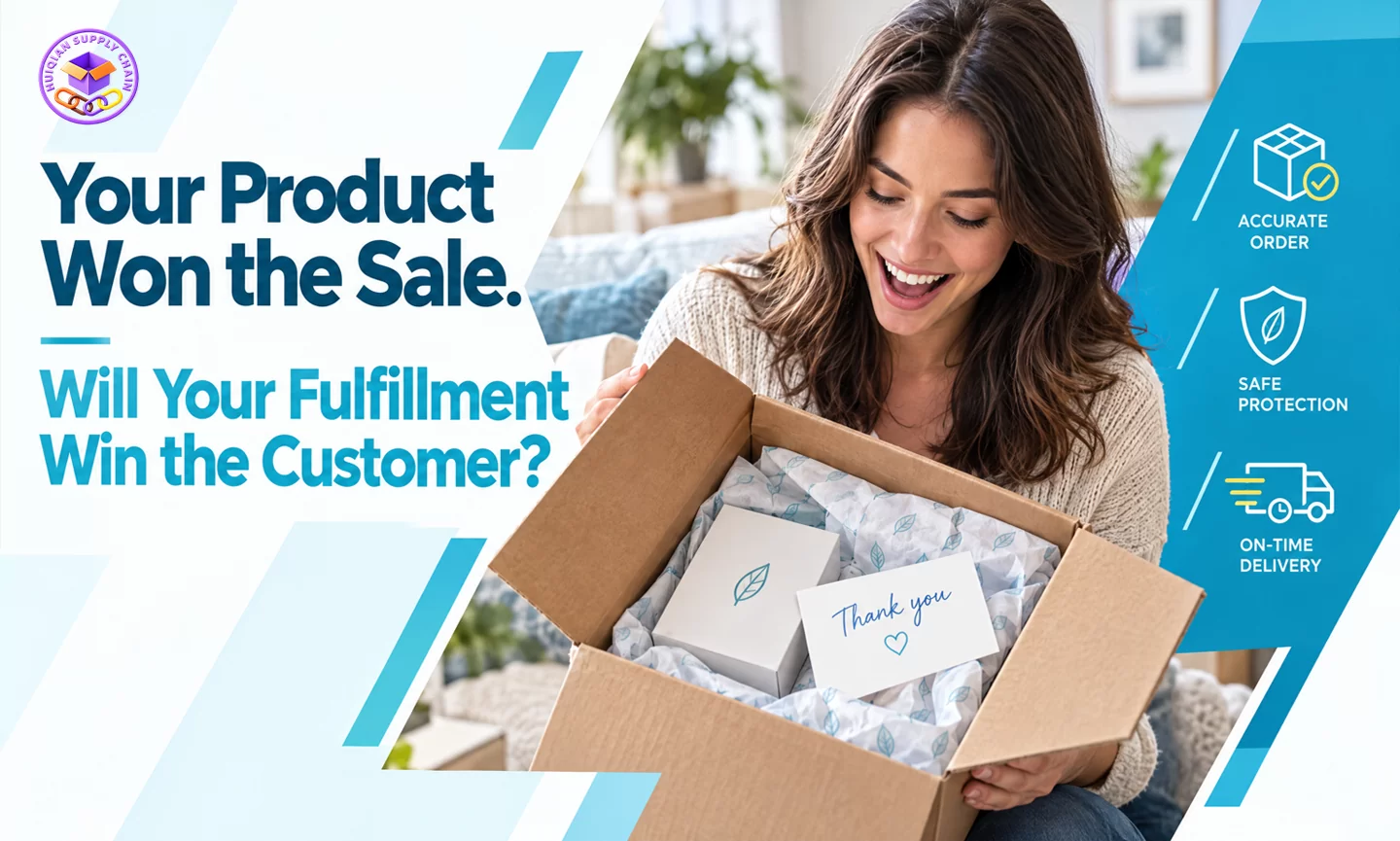
Your Product Won the Sale. Will Your Fulfillment Win the Customer?
Getting a customer to place an order is only the beginning of an ecommerce business. What happens after checkout can be just as important as the product itself.
A delayed parcel, incorrect item, or poorly packaged order can turn a promising customer relationship into a disappointing experience. On the other hand, reliable delivery and thoughtful packaging can help customers feel confident about buying from your brand again.
This is where ecommerce fulfillment makes a difference. It is not simply about moving products from a warehouse to a customer's doorstep. It is about delivering on the promises your brand makes.
1. Fulfillment Is Part of Your Brand Experience
Customers may discover your store through social media, advertisements, or product recommendations. They make a purchase based on what they see and expect.
But after checkout, their experience depends heavily on your fulfillment operations.
Accurate order processing, careful packaging, reliable tracking, and reasonable delivery times all influence how customers perceive your business.
For dropshipping sellers, this can be particularly challenging because sourcing, inventory, and shipping may involve multiple parties. Without clear coordination, small problems can quickly affect the entire customer experience.
A strong brand promise needs a reliable fulfillment process behind it.
2. Four Fulfillment Problems That Can Cost You Customers
Delayed Deliveries
Customers want to know when their orders will arrive. Unclear delivery estimates and unexpected delays can lead to complaints and reduce trust.
Review shipping performance regularly and communicate realistic delivery windows before customers complete their purchases.
Inventory Inaccuracy
Imagine selling a popular product only to discover that your supplier has run out of stock. Canceled orders and refund requests can damage customer confidence.
Accurate inventory information, regular stock checks, and timely supplier communication help reduce this risk.
Inconsistent Product Quality
Even an attractive product can disappoint customers if the item they receive differs from their expectations.
Product inspections and quality control before dispatch can help identify visible defects, incorrect items, or packaging issues before they reach the customer.
Generic Packaging
Packaging is often the first physical interaction customers have with your brand. Damaged parcels or careless presentation can undermine an otherwise positive purchase experience.
Thoughtful packaging, branded inserts, and thank-you cards can make deliveries feel more professional and memorable.
3. Build a Fulfillment Process Customers Can Trust
Improving fulfillment does not necessarily mean adding more complexity. It means making the essential steps more consistent.
Start by reviewing your operations across five areas:
Sourcing: Work with suppliers who can provide consistent products and clear stock information.
Inventory: Monitor stock levels and keep inventory records as accurate as possible.
Quality control: Check products and orders before dispatch.
Shipping: Choose suitable shipping channels based on cost, destination, and delivery expectations.
Communication: Provide tracking information and respond promptly when problems occur.
These steps work together. Fast shipping cannot compensate for incorrect products, and beautiful packaging cannot fix repeated stock shortages.
A reliable fulfillment strategy considers the entire order journey rather than optimizing only one part of the process.
4. Why the Right Fulfillment Partner Matters
Managing every operational detail independently can become difficult as your store grows, especially when you sell across multiple markets or work with several suppliers.
A fulfillment partner can help coordinate product sourcing, warehousing, inventory management, quality control, packaging, and shipping.
HQ Dropshipping offers an integrated fulfillment solution designed to support ecommerce sellers throughout these processes. Services include product sourcing, warehousing, order fulfillment, custom packaging, and global shipping to markets including the US, Europe, the UK, and Australia.
For eligible sellers processing 50 or more orders per day, free custom packaging is available subject to service terms. HQ also provides fulfillment capacity of up to 20,000 orders per day, supporting businesses with growing operational needs.
By coordinating more of the supply chain through one partner, sellers can spend less time managing disconnected processes and more time improving their products, marketing, and customer relationships.
5. Measure Fulfillment Beyond Shipping Speed
Fast delivery is valuable, but it should not be the only measure of fulfillment performance.
To understand how well your operations support your business, monitor several indicators:
Order processing time: How quickly are orders prepared for dispatch?
On-time delivery rate: How often do orders arrive within the estimated window?
Order accuracy: How frequently are the correct products shipped?
Inventory accuracy: How closely do recorded stock levels match actual availability?
Customer complaints and returns: Are recurring fulfillment issues affecting customer satisfaction?
Reviewing these metrics helps you identify operational weaknesses before they become larger problems.
For example, repeated delivery complaints may indicate that your shipping estimates need adjustment, while frequent order errors may point to issues in picking, packing, or inventory organization.
The goal is to create a fulfillment process that is dependable, measurable, and capable of improving over time.
Final Thoughts
Winning a sale brings a customer to your business. What happens after checkout helps determine whether that customer will trust your brand again.
Reliable sourcing, accurate inventory, careful quality control, thoughtful packaging, and consistent shipping all contribute to a better customer experience.
For growing ecommerce businesses, fulfillment should not be treated as an afterthought. It is an important part of building customer trust and supporting long-term growth.
Your product may win the first sale. A reliable fulfillment experience can help earn the next one.
Frequently Asked Questions
1. How does fulfillment affect customer satisfaction?
Fulfillment influences delivery speed, order accuracy, product condition, tracking visibility, and packaging quality. Problems in these areas can lead to complaints and reduce customer trust.
2. What is the most important part of ecommerce fulfillment?
There is no single factor. Successful fulfillment depends on coordinating inventory, order processing, quality control, packaging, and shipping to deliver a consistent experience.
3. Can custom packaging improve my brand image?
Yes. Branded packaging and thoughtful inserts can create a more recognizable and professional unboxing experience, provided the packaging also protects the product effectively.
4. When should I consider outsourcing fulfillment?
Consider outsourcing when order processing becomes difficult to manage, you need more reliable inventory and shipping coordination, or your business requires capabilities that are costly to maintain in-house.